A practical guide to getting the size and height right — how much room your dog needs, how tall the panels should be to stop jumping, and how to lay out a run that suits your yard. Written by the team at Super Fence.

A good dog enclosure gives your dog a safe, secure space to be outside — room to move without the risk of escaping, digging out or clearing the fence. Getting it right comes down to three things: enough floor space for your dog’s size and energy, enough height to stop jumping, and a layout that fits your yard. Here is how to size each one.
There is no single magic number, but the principle is simple: the bigger, more active, and longer-confined the dog, the more room it needs. A run should let your dog move, turn and stretch out comfortably — not just stand in it. A high-energy working breed that spends most of the day in the run needs far more space than a small dog that is only enclosed for short stretches.
Because our panels clamp together in a modular system, you are not locked into a fixed size. Start with a run that comfortably suits your dog today, and add panels to extend it as you need. Tell us your breed and how the run will be used and we will help you plan a sensible footprint.
Whatever the size, a run that genuinely holds a dog comes down to a few things done right:
Because every panel clamps to the next, you can build a run in almost any rectangular or L-shaped layout to suit the space you have — along a fence line, in a corner of the yard, or as a free-standing run. Add a gate wherever it works best for you, and expand the run later without starting over.
That flexibility is why the same panels suit backyards, breeders, kennels and boarding facilities alike.
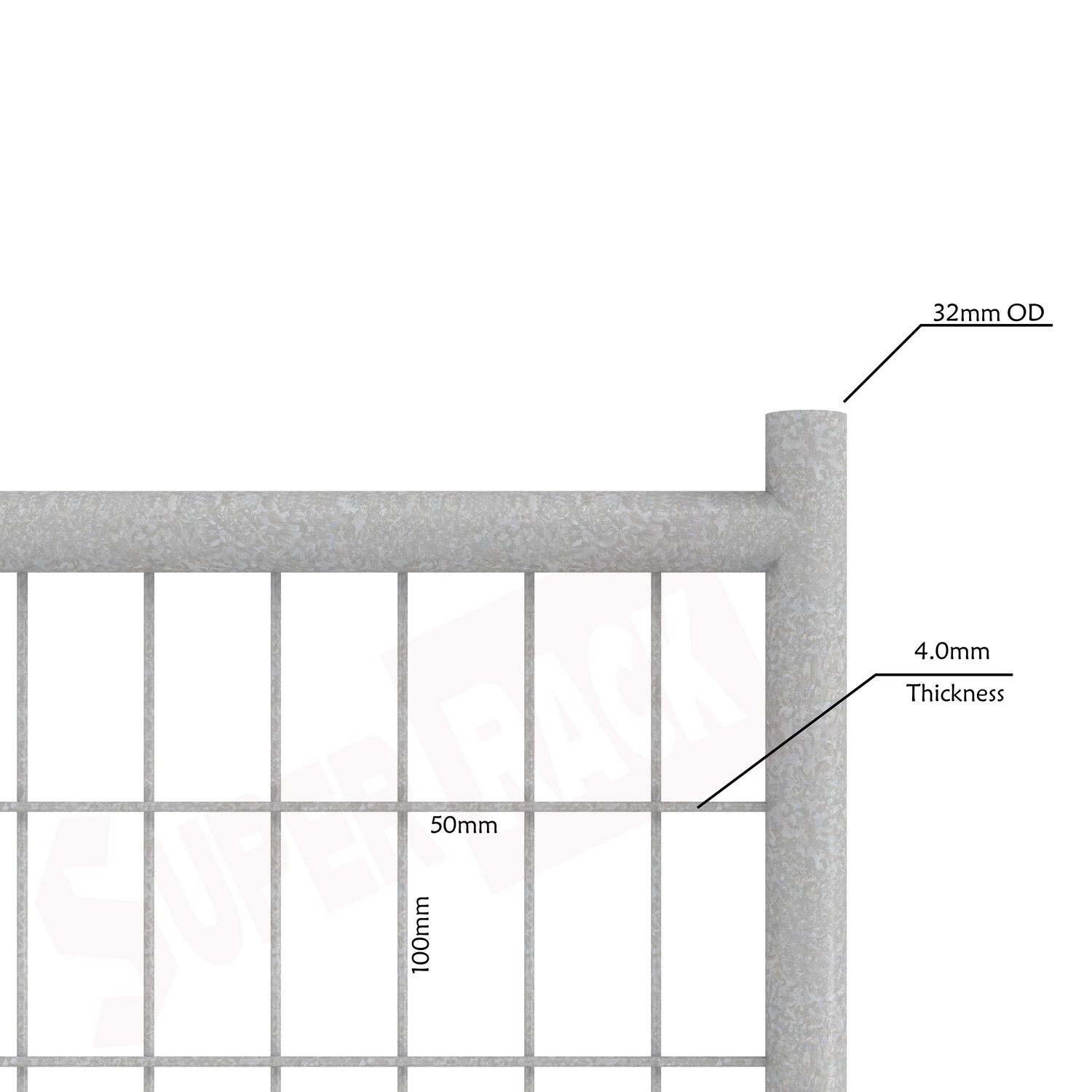
Height is where most escapes start. For small and low-energy dogs a standard panel height is usually plenty. For medium to large or athletic breeds — the ones that can clear a low fence from a standing start — choose a taller panel that comfortably exceeds their jumping reach. For determined climbers and jumpers, a covered or roofed section removes the option entirely. If you are not sure where your dog sits, it is always safer to go taller.

A matching gate clamps into the panel line so you can get in and out easily without leaving a weak point or a gap a dog can push through. Position it where it suits your daily routine — and you can move it later if your layout changes.
The panels work on all three surfaces. On soft ground — grass or dirt — you can peg or foot the panels for stability, and a paver or mesh floor section helps with diggers. On concrete the panels sit on feet or can be fixed down. Tell us your surface and we will suggest the right base so the run stays put.
As a rough guide, the bigger and more active the dog, and the more time it spends in the run, the more room it needs — enough to move and turn, not just stand. Combine panels to build a run that suits your yard and breed, and we can help you plan the layout.
For most medium to large breeds a taller panel is safer, since athletic dogs can clear low fencing. Choose a height that comfortably exceeds your dog’s jumping reach, and consider a covered or roofed section for known escape artists.
Yes — the panels clamp together so you can build a run in almost any rectangular or L-shaped layout, add a gate, and expand it later. That makes them ideal for backyards, breeders, kennels and boarding.
The panels suit all three. On soft ground you can peg or foot them for stability; on concrete they sit on feet or can be fixed down. Tell us your surface and we’ll suggest the right base option.
Yes, we ship dog run and enclosure panels across Australia from Brisbane. Send your postcode and the number of panels for a freight estimate.
Tell us your dog’s breed and how the run will be used, and we’ll help you put together an enclosure that’s the right size and height — and easy to extend later.
Get a quote